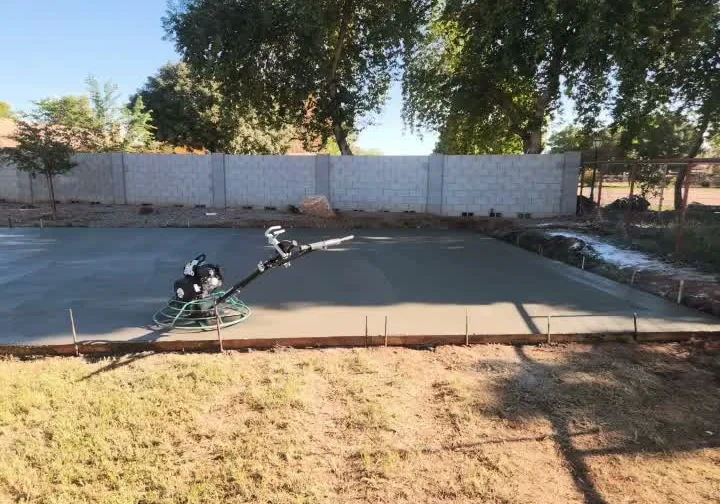
Sport Court Slabs
We pour and finish concrete slabs for backyard pickleball, basketball, and multi-sport courts across Queen Creek and the East Valley.
Learn More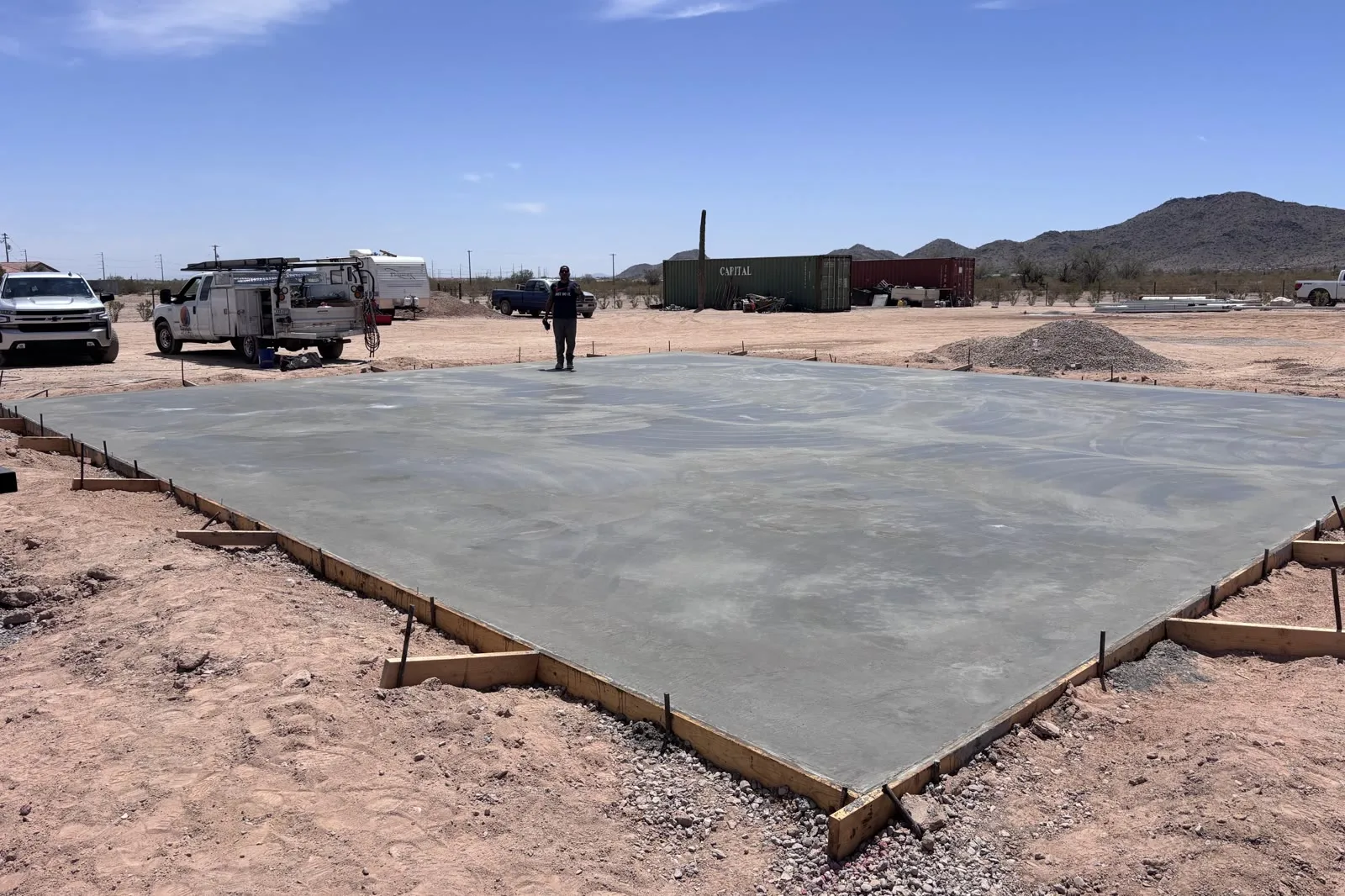
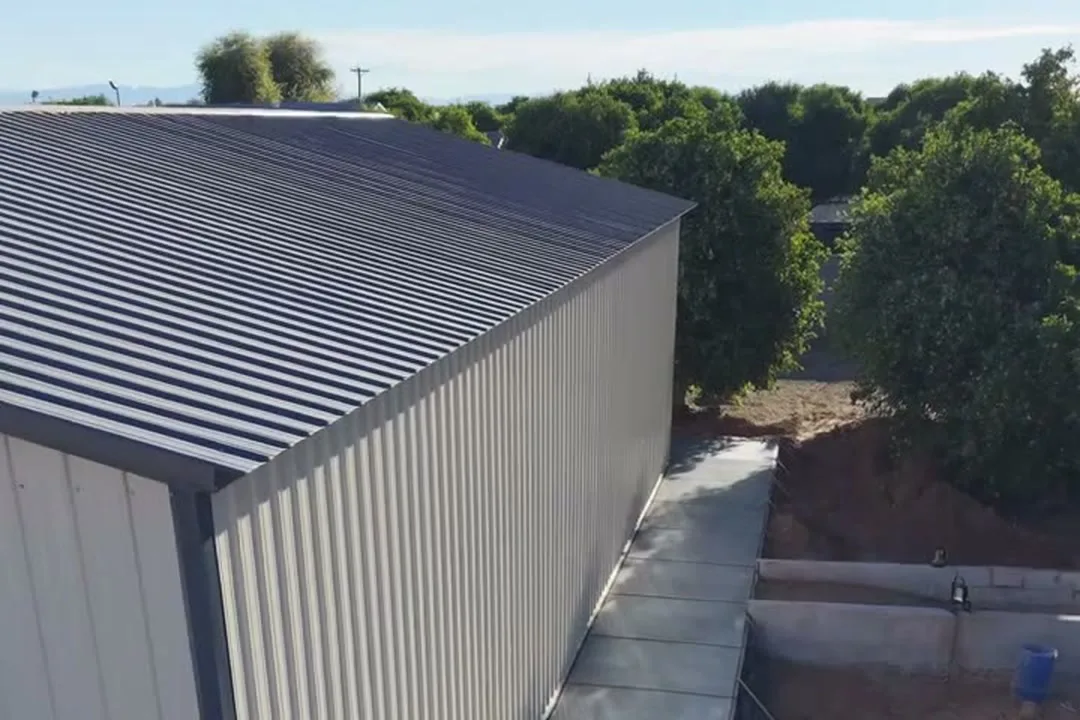
A steel building foundation is the one part of the building the manufacturer does not ship. The kit shows up with an anchor bolt plan and column loads, and the concrete has to match that plan to the inch or the frame will not bolt down. DC Construction and Development pours foundations and slabs for pre-engineered metal buildings, shops, detached and RV garages, barns, and shipping-container structures across Queen Creek, San Tan Valley, Gilbert, Chandler, Mesa, Apache Junction, and Florence.
These are big pours on rural lots and acre properties, and our crews are set up for them. A 40x60 shop pad takes around 30 yards of concrete, and in summer we start those pours at 2 a.m. so the slab is finished before the heat hits. We set the pad, the thickened edges or footings, and the anchor bolts from the erector's drawings, then hand you a pad the building crew can bolt straight to.
Tell us about your project — we’ll get right back to you.
Most pre-engineered metal buildings in the East Valley go on one of three foundations. A monolithic slab with a thickened edge pours the floor and the footing in one shot and suits most shops, garages, and barns. A slab with separate perimeter footings, or a footing and stem wall, is the answer when the building is taller, the columns carry more load, or the site slopes. Pier footings under each column show up on carports and open-sided structures. The Valley is frost-free in practice: Queen Creek's code amendments set the frost line at 12 inches and rate weathering as negligible, so footings here go 12 inches below undisturbed ground to meet the residential code minimum, not four feet down like a northern shop pad. What sets the footing size is the column load and the wind, which Queen Creek designs at 100 mph and Pinal County at 115.
The manufacturer's drawings decide the details: the anchor bolt pattern, the bolt diameter and projection, and the load each column puts into the concrete. Most residential garage floors pour at four inches. Shops and barns that will see trucks, trailers, or a lift go to six, with the thickened edge or footing carrying the columns and 3,000 to 4,000 psi concrete throughout. Every column gets at least four anchor rods, the federal minimum for steel erection, and nobody cuts or bends a bolt in the field without the engineer's sign-off. We form and pour to those numbers, set the bolts in a template so they land where the base plates need them, and leave the pad flat enough that the erector is not shimming columns on day one.
Arizona's state soil, the Casa Grande series, was first mapped in Pinal County in 1936, and across the East Valley basin floor it carries a caliche layer 20 to 40 inches down. The University of Arizona describes caliche as soil cemented together by calcium carbonate, anywhere from loose to rock-like, and it stops water from moving. Mixed in with it are the shrink-swell clays the Arizona Geological Survey blames for heaved and cracked floor slabs across the state. A shop pad that cracks two years in almost always cracked because of the ground under it, not the concrete on top. We excavate to grade, break out and remove caliche where the footing needs to bear, bring in base where the native soil is loose, and compact it in lifts before a single form goes up.
Water is the other half. The pad gets graded so monsoon runoff moves away from the building and its doors instead of pooling at the slab edge, and a vapor barrier goes under any floor that will be enclosed. Control joints get cut on a grid sized to the slab so shrinkage cracks run where the joints are, not through the middle of the shop floor.
Queen Creek's R1-43 district is one-acre zoning that allows up to four animal units per lot, and Pinal County's R-43 is one-acre zoning too. Queen Creek is the fastest-growing town in Arizona, up 51 percent since 2020 to about 89,800 people, and Pinal County pulled more than 8,000 single-family permits in 2025. That is where most of these buildings go up: a workshop behind the house, an RV garage tall enough for the fifth wheel, a hay or equipment barn, or a barndominium shell that gets finished out later. Barndominiums are no longer a niche: seven percent of single-family builders told a 2024 NAHB survey they had built one in the prior year, and seven in ten of those were a house paired with a large shop. Each one starts with a pad sized to the building, the doors, and what will roll through them.
Shipping-container builds are their own kind of job. A container carries its weight at the four corner castings, so the pad or piers under it need bearing exactly where the corners land, and the surface has to be level enough that the doors still swing. We have set container pads and piers for container structures and pour them to the same standard as a building slab.
A sport court is a shop pad with a different finish, and it now has its own page: our pickleball and sport court slab page covers court sizes, thickness, slope, and the cure time a court coating needs. We poured a 60x90 sport court in Gilbert, and the same crews handle the other big flat pours below.
The same crews and the same approach handle equipment yards, loading areas, and parking pads that need to hold real weight. If the pad is for a trailer, a boat, or a motorhome, our RV pads and parking slabs page covers the sizing.
In Queen Creek, any detached structure of 200 square feet or more needs a building permit, the plans have to include a foundation plan, and anything beyond the residential code's prescriptive rules has to be designed by an Arizona registrant. On one-acre R1-43 lots, an accessory building 15 feet tall or lower can sit five feet off the rear line and ten feet off the side; taller buildings meet the district's full setbacks. Pinal County exempts only sheds and similar buildings under 200 square feet of roof area, treats any building a vehicle parks in as a garage that is never exempt, and asks for a foundation plan in every permit set. San Tan Valley became a town on September 17, 2025, and its permits are moving from Pinal County to the new Town in stages through 2026, so on a San Tan Valley address the first call is to confirm which office takes the zoning clearance and which takes the building permit.
The permit set for a steel building normally includes the manufacturer's engineered drawings and a foundation plan that matches them, so get the building order placed before the pad is scheduled. We work from the same drawings the inspector will check, and we pour after the footing inspection, not before it.
Free, no-obligation estimates across Queen Creek & the East Valley.
(720) 434-2926From the first call to the final finish, here’s exactly what working with us looks like.
Fill out our quick estimate form or give us a call. Tell us about your project — driveway, patio, slab, RV pad, remodel, or anything in between.
We come out, look at your space, talk through your goals and options, and give you honest, upfront pricing — free and with no obligation.
Once you’re ready, we lock in your start date and walk you through exactly what to expect from pour to finish.
Our crew shows up on time, does high-quality work, keeps a clean job site, and doesn’t leave until it’s done right.
Common questions about steel building pads across Queen Creek & the East Valley. Don’t see yours? Give us a call — we’re happy to help.
We pour and finish concrete slabs for backyard pickleball, basketball, and multi-sport courts across Queen Creek and the East Valley.
Learn More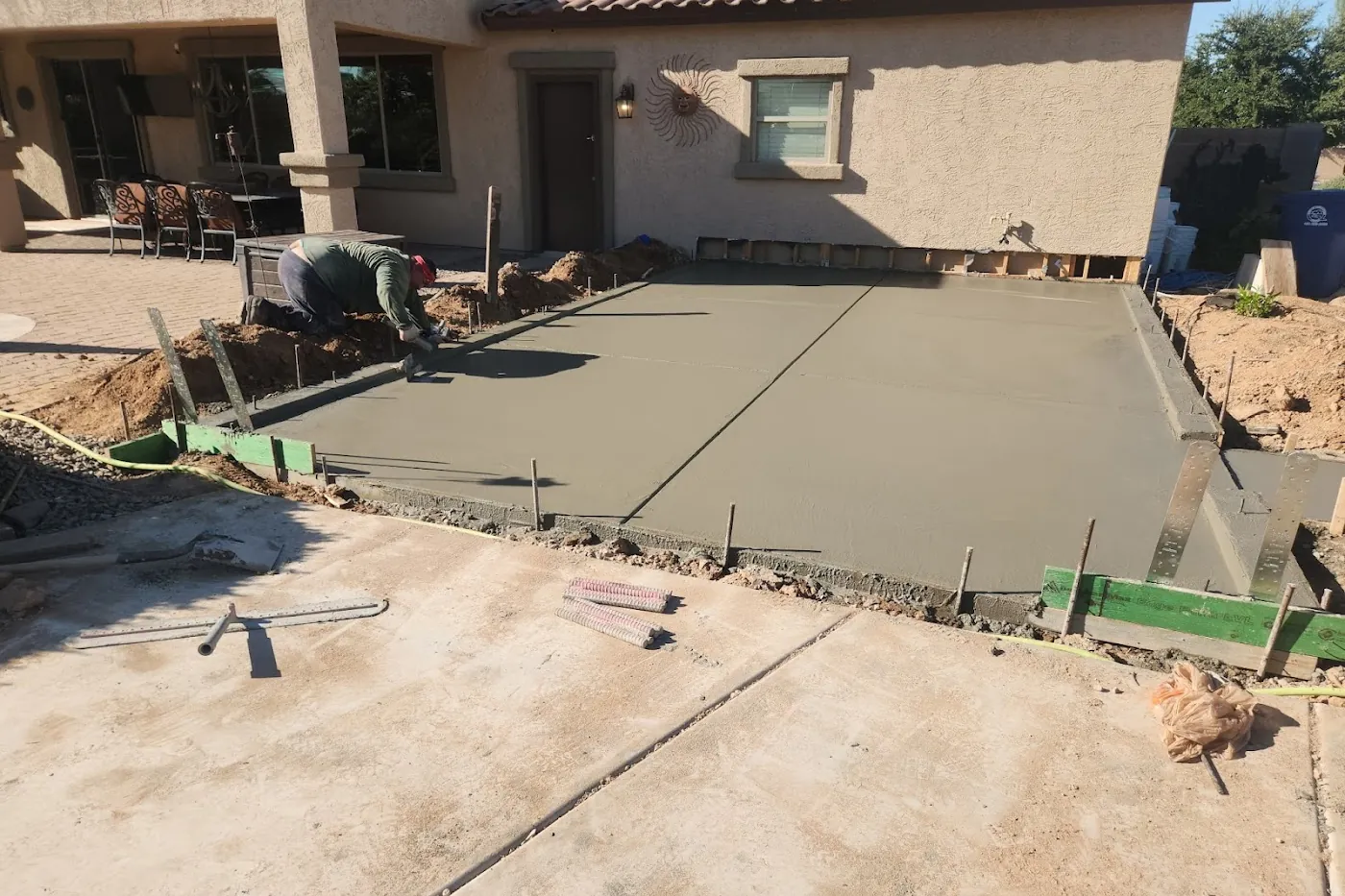
Stem-wall foundations, casita and room-addition slabs, shed slabs, and equipment pads — formed and poured on a properly prepped, reinforced base that won’t crack or settle.
Learn More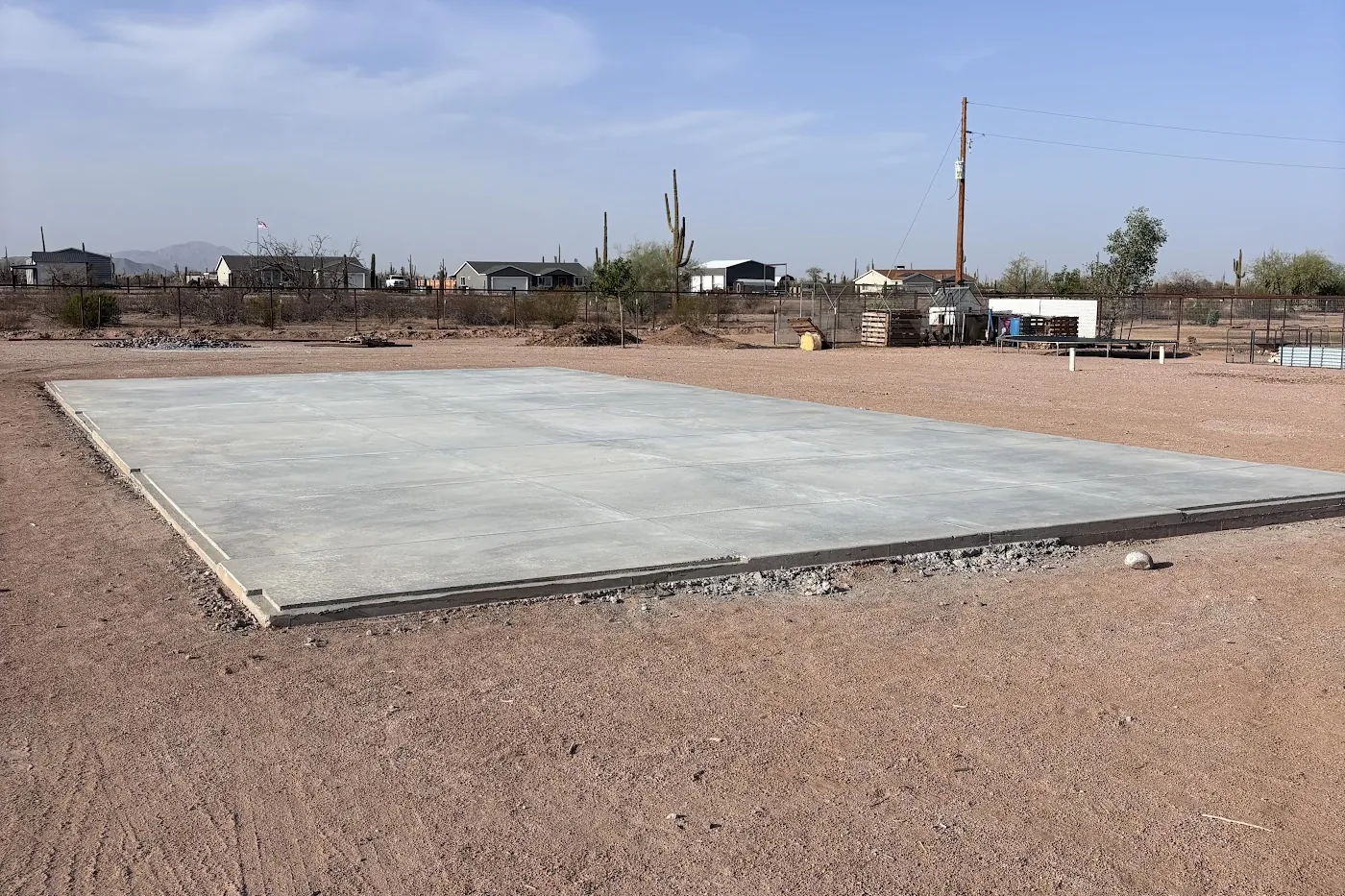
Heavy-duty concrete RV pads, parking slabs, and parking-area expansions — poured thick and reinforced to handle big vehicles without cracking or sinking.
Learn More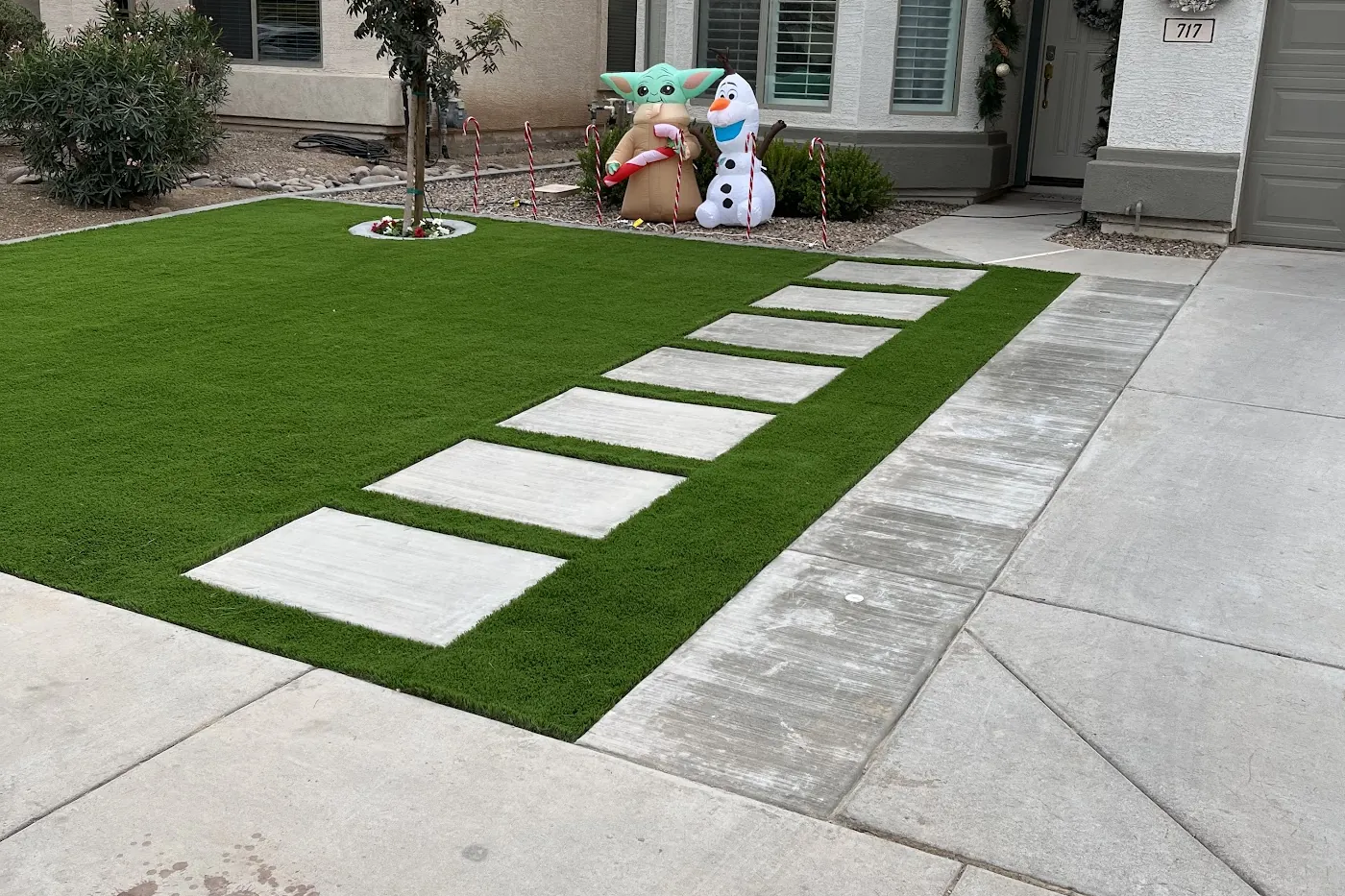
Cracked, sunken, or settling concrete? We tear out failed driveways, patios, slabs, and sidewalks and pour new on a properly prepped base so the problem does not come back.
Learn MoreRated 5.0 across Google reviews. East Valley homeowners trust us for honest work, fair pricing, and a finished result that lasts.
We show up when we say we will, keep you updated by text, and keep your project moving — no chasing us down, no surprises.
Proper base prep, the right thickness, and clean finishes. We build concrete and construction work to hold up to Arizona heat for the long haul.
Free, no-obligation estimates and honest pricing before we start. We work within your budget — and there are no surprises on the invoice.
From driveways and patios to remodels, additions, drywall, and paint — one trusted local crew for the whole project, residential or commercial.
Locally owned and operating right here in Queen Creek — we know the soil, the climate, and what it takes to build it right in the desert.
Rated 5.0 from 24+ Google reviews across the East Valley.
“DC Construction did a phenomenal job with my patio extension and walkway addition. They were professional, patient with questions, and committed to quality.”
“Very professional, on time, updates via text if there was a change in arrival time, early or delayed. Great job, awesome clean-up and a fair price.”
“Dustin listened to me. He kept within my budget and went above and beyond to make sure we were happy. I highly recommend!”
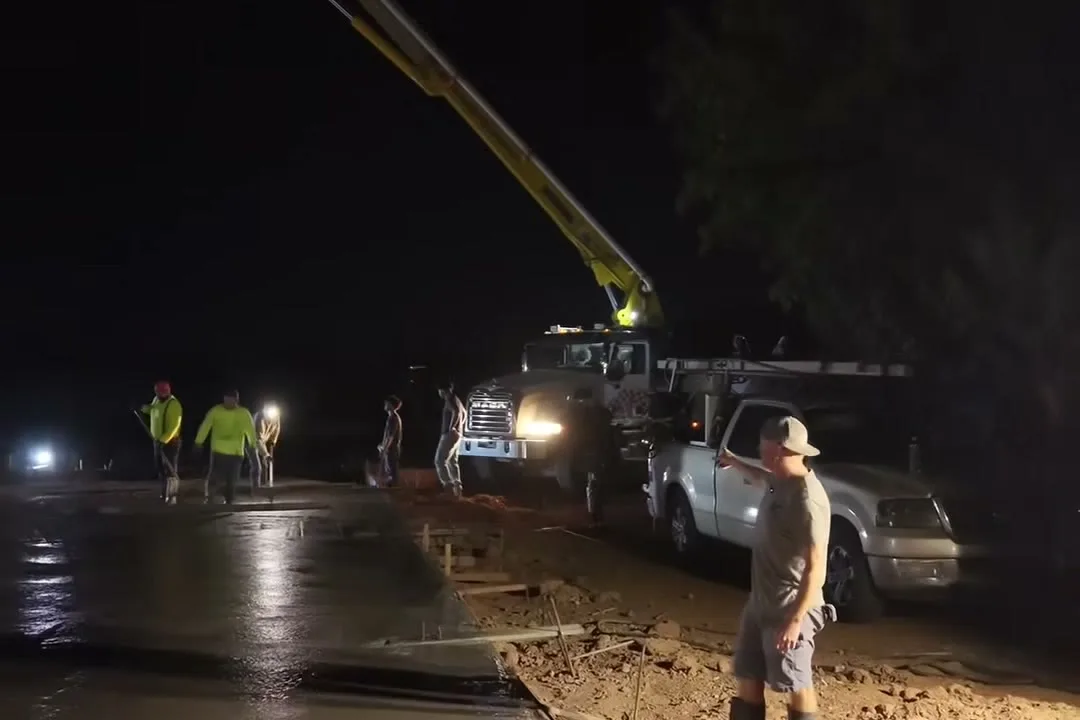
Do you need a permit for concrete work in Queen Creek, AZ? Flatwork at grade is not on the Town list. Slabs under structures are. East Valley guide.
Read more →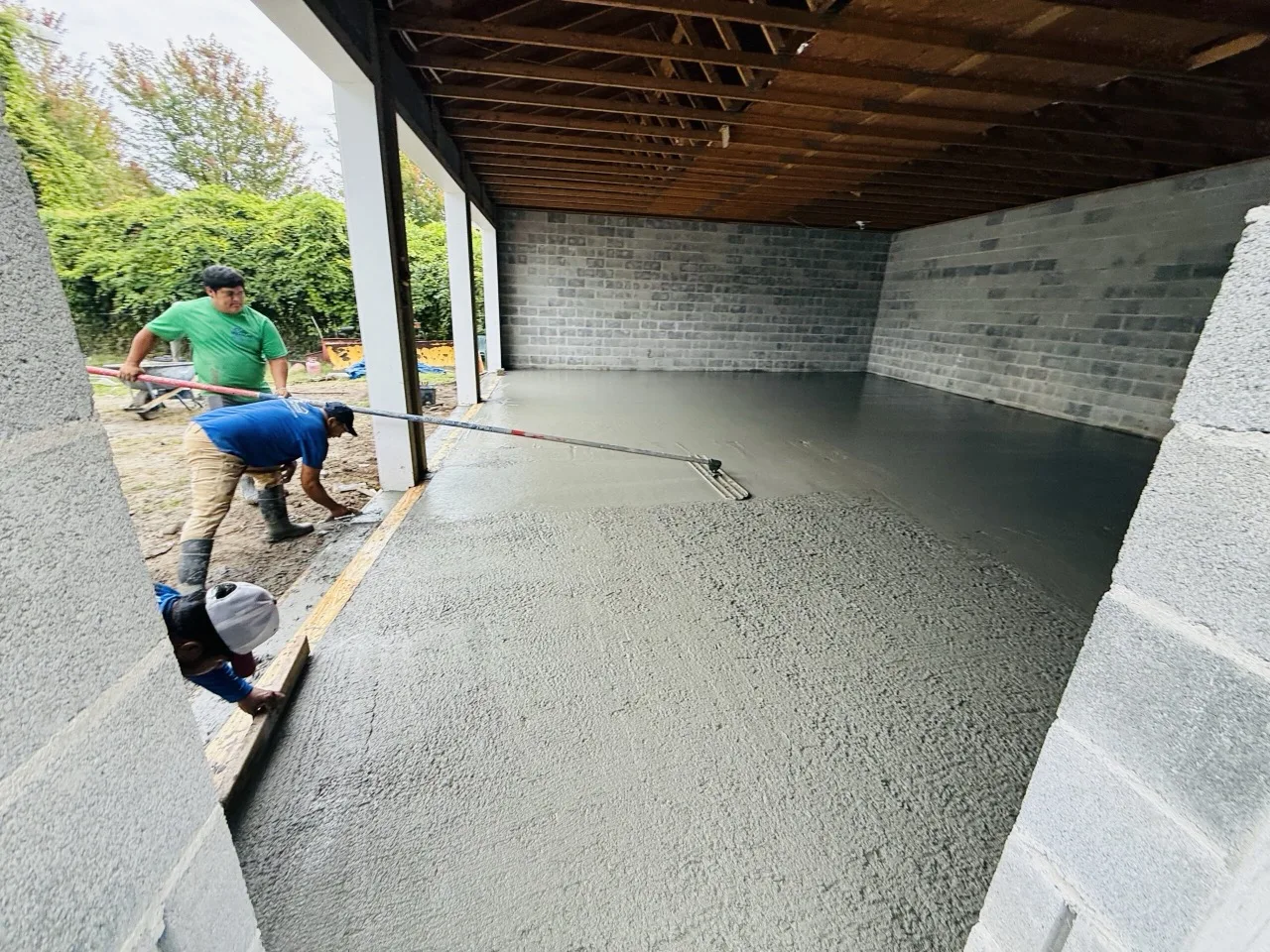
What concrete costs per square foot in Arizona in 2026: real installed ranges by finish and project, worked slab totals, and the desert factors that move the price.
Read more →Ready to pour, build, or remodel in Queen Creek or anywhere across the East Valley? Reach out today for a free, no-obligation estimate — and put a 5-star local crew to work on your project.
Tell us about your project — we’ll get right back to you.