How much does an RV pad cost in Arizona?
HomeGuide’s 2026 guide puts RV pad cost at $1,200 to $8,400 installed for 200 to 700 square feet of concrete. Angi’s 2026 average for a 640 square foot RV pad is $3,840. These are national figures, and a real number needs a look at the site.
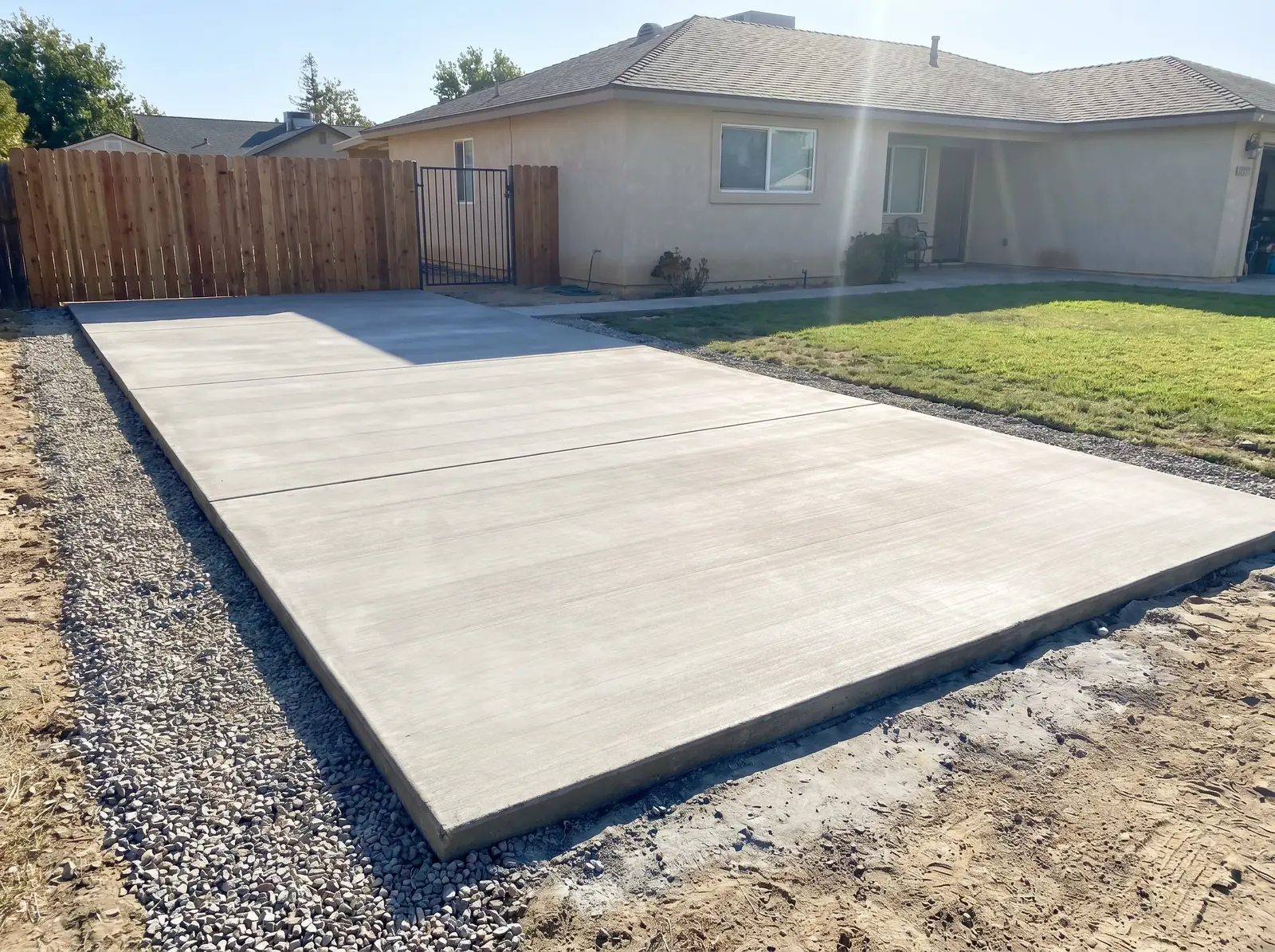
If your RV sits on dirt or loose gravel, a concrete pad gives it a solid place to park. DC Construction and Development pours concrete RV pads and parking slabs across Queen Creek and the East Valley. A loaded motorhome puts far more weight on a slab than a patio carries. That load and the ground under the pad shape the price.
This is a plain-English guide to RV pad pricing. Every dollar figure names a published national cost guide as its source. These are market ranges, not a quote from DC Construction. The post covers ranges by pad size, what moves the price and what local codes say about parking. For other slab uses, see our concrete slab cost guide.
What do cost guides say an RV pad costs?
Cost guides price an RV pad like any concrete slab, by the square foot. HomeGuide’s 2026 range for a slab is $6 to $12 per square foot installed. Angi’s 2026 averages for parking and RV pads work out to $6 per square foot. All are national figures.
HomeGuide’s RV pad row works out to $6 to $12 per square foot. Angi lists a 200 square foot parking pad at $1,200 and a 640 square foot RV pad at $3,840. That $6 matches the low end of HomeGuide’s 4-inch slab price, and a 6-inch pad prices higher. An RV garage slab also carries walls and a roof, covered on our steel building foundations and shop pads page.
How much does an RV pad cost by size?
HomeGuide’s 6-inch rate is $8 to $10 per square foot. At that rate, a 10 by 30 foot pad runs $2,400 to $3,000. A 12 by 50 foot pad runs $4,800 to $6,000. These are national figures, not a quote.
Our driveway thickness guide puts RVs and heavy trucks at 5 to 6 inches with rebar, against 4 inches for cars. Measure the rig hitch to bumper and across the mirrors. Size the pad to it, and check any RV gate opening too. A side-yard pad may need a concrete run from the driveway, priced in our driveway extension cost guide. That run is part of our concrete driveway work.
HomeGuide’s national 6-inch rate by pad size. Volumes exclude waste, and base work or steel can add cost. Not a quote.
| Pad size | Area | Concrete at 6 inches | At $8 to $10 per sq ft |
|---|---|---|---|
| 10 by 30 feet | 300 sq ft | 5.6 cubic yards | $2,400 to $3,000 |
| 12 by 40 feet | 480 sq ft | 8.9 cubic yards | $3,840 to $4,800 |
| 12 by 50 feet | 600 sq ft | 11.1 cubic yards | $4,800 to $6,000 |
| 14 by 50 feet | 700 sq ft | 13.0 cubic yards | $5,600 to $7,000 |
| 14 by 60 feet | 840 sq ft | 15.6 cubic yards | $6,720 to $8,400 |
What changes the price of an RV pad?
Thickness and base work both change the price. HomeGuide prices 4-inch slabs at $6 to $8 per square foot installed, and 6-inch slabs at $8 to $10. On a 12 by 50 foot pad, that step adds $1,200 at both ends.
HomeGuide says slab installers charge $3 to $5 per square foot for labor, part of its installed price. On a 12 by 50 foot pad, that is $1,800 to $3,000. Angi notes that hard-to-reach sites cost more. When a mixer truck cannot reach the area, crews move and pour concrete by hand. The figures below are national too.
- Gravel base: $1 to $3 per square foot in HomeGuide’s guide.
- Grading: leveling or regrading runs $0.40 to $2.00 per square foot.
- Sealing: HomeGuide prices it at $1 to $3 per square foot.
- Old material: an old slab or gravel bed has to come out first, covered in our concrete removal cost guide.
- Hookups: power, water or sewer lines are separate electrical and plumbing work, so plan them before the pour.
Is a gravel RV pad cheaper than concrete?
It can be, up front. HomeGuide puts a gravel driveway at $4 to $10 per square foot installed, against $8 to $10 for 6-inch concrete. On a 12 by 50 foot pad, that is $2,400 to $6,000 in gravel and $4,800 to $6,000 in concrete.
HomeGuide says gravel that must support trucks or RVs should be at least 8 to 12 inches deep. In Queen Creek, a gravel parking area also needs a permanent border. HomeGuide prices edging or curbing at $5 to $18 per linear foot. A 12 by 50 foot pad has 124 feet of edge, so a full border adds $620 to $2,232. We pour concrete, so gravel is here for comparison.
What do Queen Creek and Gilbert codes say about RV parking?
Queen Creek Town Code 10-8-6 says vehicles at a home must park on a legal driveway with a dustproof surface. An improved dustproof surface immediately adjacent to that driveway also counts. The surface is concrete, asphalt millings, or gravel at least 3 inches deep. Gravel and millings need a permanent border.
That section sits in the Town’s air quality and fugitive dust article. Gilbert’s code compliance FAQ says vehicles must be parked on an improved surface of asphalt, concrete, cement or gravel. Approved areas are the garage, the drive leading to it, or an improved area adjacent to the driveway. None of this text mentions side yards, so confirm a side-yard spot with your Town.
HOA rules can be stricter than the Town’s, so read your covenants, conditions and restrictions before you price a pad. Permits are a separate question, covered in our Queen Creek concrete permit guide. A building permit is applied for by the property owner or by the contractor doing the work. We tell you up front whether your project needs one and what the Town will ask for.
How do Arizona soil and monsoon storms affect an RV pad?
Caliche and expansive clay change how the base under an RV pad gets built, and monsoon storms test the slope. Queen Creek adopted the 2021 International Residential Code. It says impervious surfaces within 10 feet of the foundation must slope at least 2 percent away from the building.
Queen Creek’s stormwater code counts sidewalks and parking lots as impervious, since they resist water soaking in. A 2 percent slope is about a quarter inch per foot, or about 3 inches across a 12-foot pad. The University of Arizona Cooperative Extension calls caliche a common problem in southern Arizona soils. Solid caliche layers restrict water movement. The Arizona Geological Survey says monsoon water can swell expansive clay to many times its original volume.
Our RV pad and parking slab service starts with a look at the ground and your rig. Ask for a free estimate or call (720) 434-2926 any time.