How much does a concrete slab cost in Arizona?
In published national guides, concrete slab cost starts as low as $600 for a small shed pad. At the top end, a 2,000 square foot home foundation runs as much as $36,900. What sits on the slab drives the price. A slab under a building may need a thicker pour and steel reinforcement.
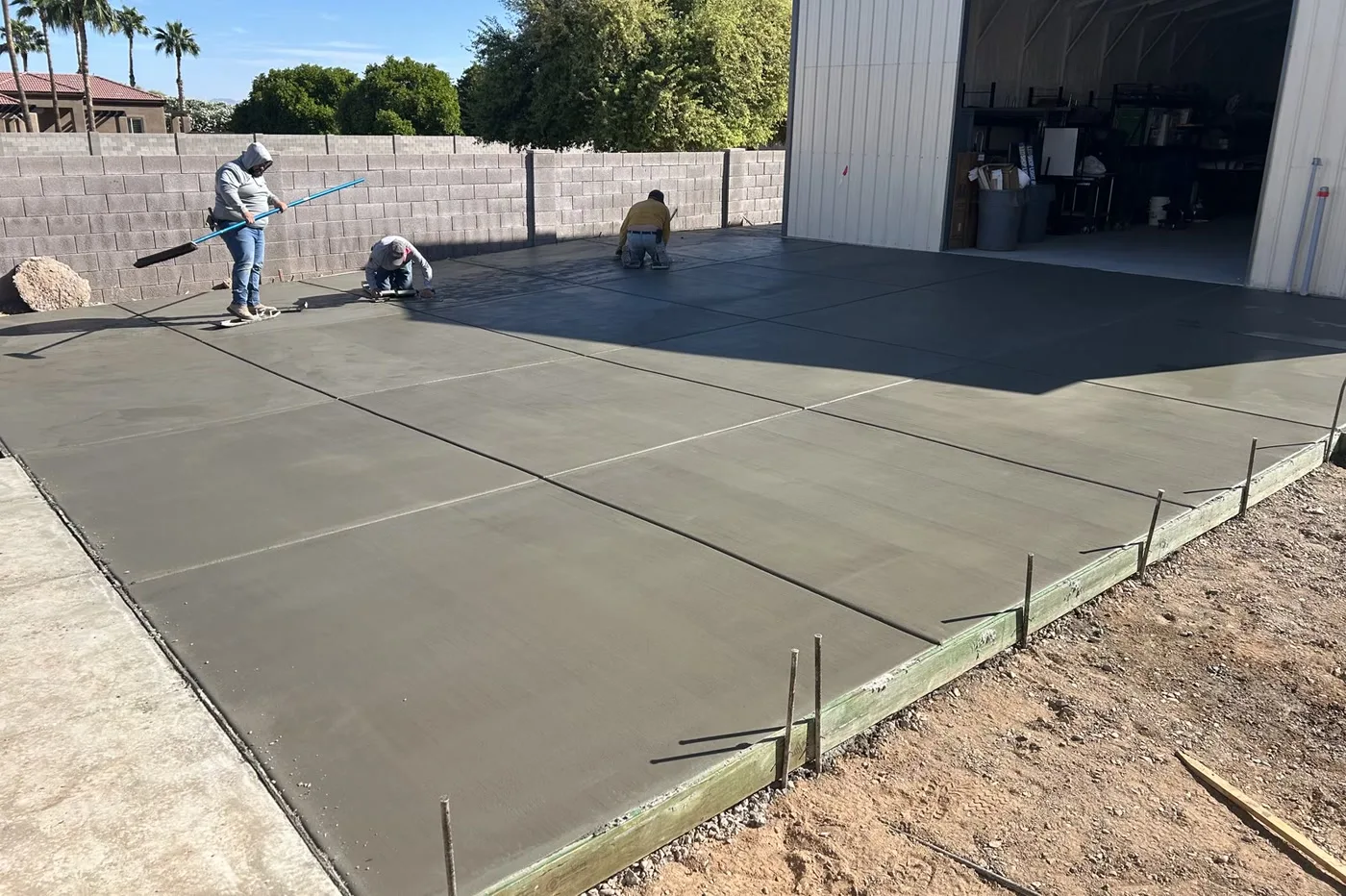
A shed pad and a home foundation are both concrete slabs, yet they sit at opposite ends of cost guides. The gap comes from what the slab carries and how it is built underneath. DC Construction and Development pours concrete slabs and foundations across Queen Creek and the East Valley. That includes shed and shop slabs and casita and addition foundations.
This plain-English guide uses published national cost ranges. They are market numbers, not a quote, and your real number needs a look at the site. It covers slab costs by use, then what a building on top and Arizona ground add. For pricing per square foot by finish, see what concrete costs per square foot in Arizona.
What does a concrete slab cost for each use?
National cost guides price a slab by its job. A shed pad sits at the low end, and a slab under a home sits at the top. The table pulls those published ranges together. Each one is a national figure, not a local quote, and East Valley ground can move it.
Size is only part of a slab’s price, and the load on top matters too. A hot tub pad is small, but a full spa weighs 3,000 to 6,000 pounds. A steel building slab needs thickened edges or footings under the frame, plus anchor bolts set to the manufacturer’s plan. Those pads have their own page: steel building foundations and shop pads.
Published national installed ranges from HomeGuide cost guides. Market ranges, not a quote.
| Slab use | Typical size | Published installed range | What moves it |
|---|---|---|---|
| Shed pad | 100 to 400 sq ft | $600 to $4,800 | Size and truck access; most are about 4 inches thick |
| Hot tub or spa pad | Sized to the spa | $500 to $2,500 | A full spa weighs 3,000 to 6,000 pounds |
| 2-car garage floor | 400 to 576 sq ft | $2,400 to $6,900 | Reinforced slab, 4 to 6 inches thick |
| RV pad | 200 to 700 sq ft | $1,200 to $8,400 | Rig weight and drainage grade |
| Shop or steel building slab | Sized to the building | $10 to $14 per sq ft (slab with footings) | Thickened edges and the anchor bolt plan |
| Home slab foundation | 800 to 2,400 sq ft | $4,000 to $33,600 | Footings and a 6 inch reinforced pour |
| Stem wall foundation | Sized to the building | $6 to $18 per sq ft | Wall height and a sloped lot |
Why does a slab under a building cost more than flatwork?
A patio carries people and furniture, while a slab under a garage or a casita carries walls and a roof. It has to stay flat under that load. Cost guides note that home foundations may require thicker slabs or steel reinforcement. Each added step adds material and labor to the price.
The paperwork can change too, and the Queen Creek concrete permit guide covers it in full. In Queen Creek, detached structures that are 200 square feet and greater require a building permit. A permit is applied for by the property owner or by the contractor doing the work. We tell you up front whether your project needs one and what the Town will ask for.
- Thickness: most slabs are 4 to 6 inches thick, and home slab foundations typically pour at 6 inches.
- Footings: HomeGuide puts a standard concrete footing at $700 to $1,500 installed, a national range.
- Rebar: Angi’s published range adds $0.50 to $1 per square foot for rebar reinforcement.
- Vapor barrier: cost guides say home foundations typically have one, laid under the slab before the pour.
Does a monolithic slab or a stem wall foundation cost more?
Published national ranges put a monolithic, slab-on-grade foundation at $6 to $14 per square foot. A stem wall foundation runs $6 to $18 per square foot. The ranges overlap at the low end, and the stem wall tops out higher. On a casita or an addition, the plans and the site decide which one fits.
A monolithic slab serves as both the floor and the foundation, poured in one piece. Its cost runs higher than flatwork to cover footings set in place before the pour. A stem wall is a short, partly buried wall around the perimeter, with the slab poured inside it. HomeGuide calls it a good choice for building on a slope, since sections can be built to different heights.
What do caliche and clay add to a slab price in Arizona?
The ranges here are national, and East Valley ground can push a real number higher. Caliche is a cemented hardpan that may need breaking out before the base goes in. Expansive clay moves with moisture. Both are site conditions, so the real number needs a look at the site.
Base prep is where the ground shows up in the price. HomeGuide puts a gravel base at $1 to $3 per square foot. Leveling or regrading runs $0.40 to $2.00 per square foot, and clay soils may require wider footings and more reinforcement. Soil movement can also show up later as cracks, covered in why concrete cracks in Arizona.
How do summer heat and the monsoon affect a slab job?
We work year-round in the East Valley, but the calendar still shapes a slab job. In summer we start early to beat the heat. Monsoon season runs June 15 to September 30, so pour dates and drainage plans have to work around the storms.
An early start puts the pour and finishing in the cooler morning hours, so the crew has more working time. During storm season, the base is graded so runoff moves away from the slab. A pour date can also shift when a storm rolls in. That planning is part of why a desert slab gets priced at the site.
A real number for your slab starts with what will sit on it and the ground under it. Send the size and any plans, then request a free estimate from DC Construction. You can also see how we build slabs and foundations in the East Valley.