How much does a pickleball court cost in Arizona?
HomeGuide’s 2026 national guide puts pickleball court cost at $20,000 to $50,000 for a 30 by 60 foot backyard court. That is $11 to $28 per square foot installed. The range covers site prep, the slab, surfacing, a net, fencing and lights. Soil and truck access set where an Arizona yard lands.
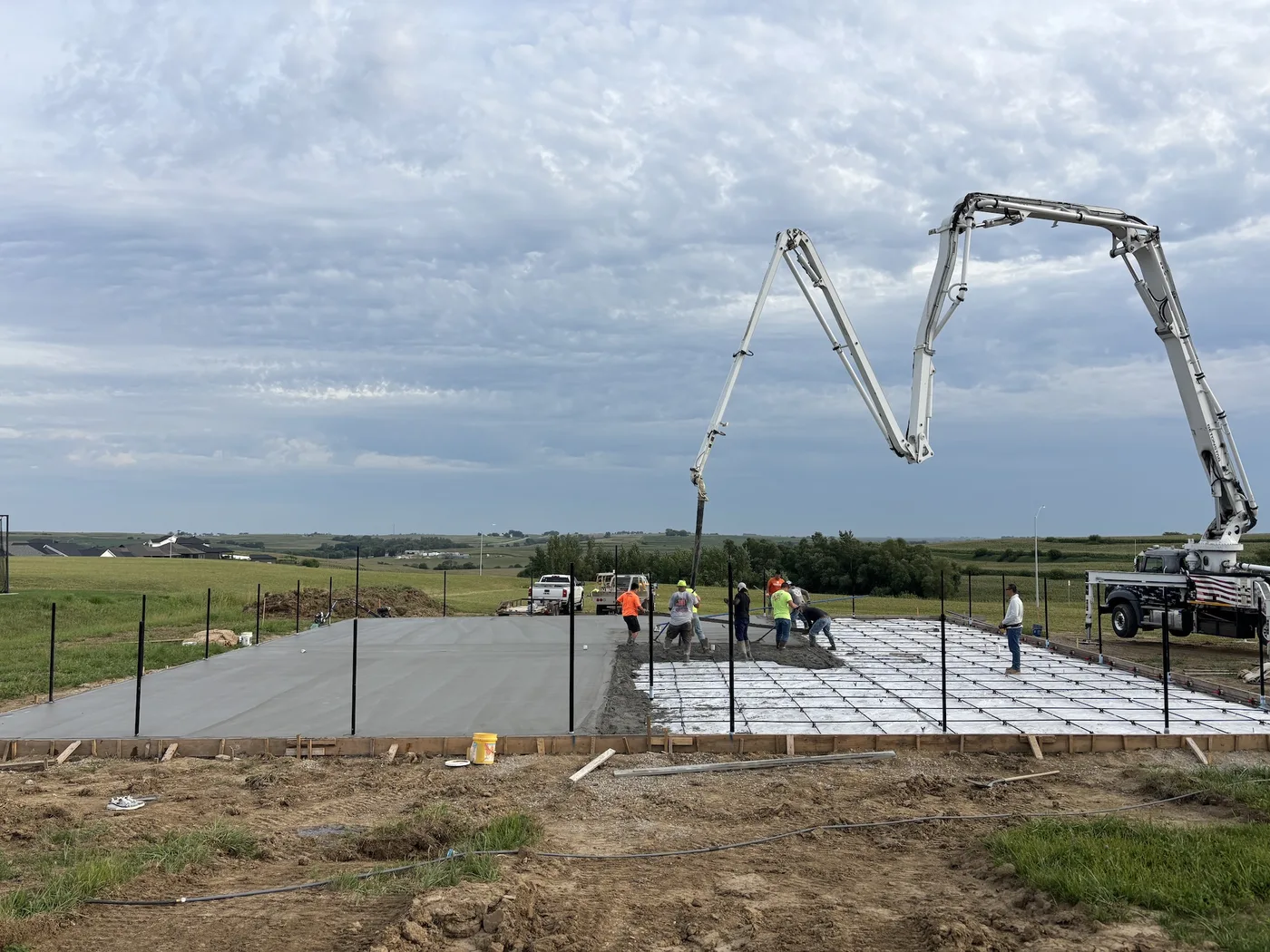
A backyard pickleball court is several jobs stacked on one patch of ground. First come the base and the slab, then an acrylic surface, lines, a net, and often a fence and lights. DC Construction and Development builds the base and the pickleball and sport court slab in the East Valley. Surfacing, striping, nets, fences and lights come from specialty trades, and each one is its own budget line.
This guide walks through each line with published cost ranges, mostly national figures from HomeGuide. They are market numbers, not a quote from us, and a real number needs a look at the site. The guide runs from ground prep on caliche and clay to bigger multi-sport slabs. For shed pads, RV pads and other slab types, see what a concrete slab costs in Arizona.
What goes into the cost of a backyard pickleball court?
HomeGuide’s 2026 guide splits a 30 by 60 foot court into six line items totaling $20,000 to $50,000 or more. Its national average is $34,000. The concrete pad is the biggest line, at $9,000 to $18,000. Fencing and lighting are optional and add $7,000 to $16,000 or more between them.
A regulation pickleball court measures 20 feet wide by 44 feet long, per USA Pickleball. HomeGuide says the pad should extend at least 5 feet around it. Its prices use a 30 by 60 foot pad of 1,800 square feet. Leave out the fence and lights, and the same published lines add up to about $13,000 to $34,000 or more.
Published national ranges for one 30 by 60 foot backyard court, from HomeGuide’s 2026 pickleball court guide. Market ranges, not a quote.
| Line item | Published range | Who does it |
|---|---|---|
| Site prep and grading | $2,000 to $10,000 or more | Concrete contractor |
| Concrete pad, 30 by 60 feet | $9,000 to $18,000 | Concrete contractor |
| Acrylic surfacing and lines | $1,500 to $3,500 | Court surfacing installer |
| Net, paddles and gear | $500 to $2,500 or more | Supplier or court installer |
| Fencing (optional) | $2,000 to $6,000 | Fence installer |
| Lighting (optional) | $5,000 to $10,000 or more | Electrician or lighting installer |
| Total | $20,000 to $50,000 or more | Several trades |
What does ground prep cost on caliche and clay?
HomeGuide puts pickleball court site prep at $2,000 to $10,000 or more, based on court size and site conditions. Leveling and grading run $500 to $5,000 in that guide. Gravel or crushed stone for the base costs $15 to $75 per cubic yard. A drainage system adds $1,000 to $4,000.
The University of Arizona Cooperative Extension calls caliche, soil cemented by calcium carbonate, a common problem in southern Arizona soils. Its layers can run from a few inches to several feet thick. HomeGuide’s footing guide adds that clay soils expand and contract with moisture changes. Both are site conditions, so we price them after a look at the yard.
What does the concrete slab cost with rebar or post-tension?
HomeGuide puts a concrete court slab at $5 to $10 per square foot, the pad line in the table. Angi’s 2026 guide prices rebar as an add-on at $0.50 to $1 per square foot. On a 1,800 square foot pad, that is about $900 to $1,800.
HomeGuide notes that post-tensioned concrete is commonly used for sports courts, since the thinner layer is strong and resists cracking. No guide above lists a separate price for post-tension, so that number comes from a bid. HomeGuide also says to plan the net post sleeves before the pour. We set thickness and reinforcement for the soil, using the same basics as our concrete slab and foundation work.
What do surfacing, nets, fencing and lighting cost?
Specialty trades handle these lines after the slab cures. For one 30 by 60 foot court, HomeGuide puts surfacing at $1,500 to $3,500. A net runs $300 to $1,500. Fencing runs $2,000 to $6,000 installed, and lighting runs $5,000 to $10,000.
Most acrylic surfaces include one standard color, with extra costs for more colors or custom logos. Light colors absorb less heat for a cooler court surface, which matters under Arizona sun. Interlocking rubber tiles over a concrete base are another option, at $4 to $17 per square foot installed. HomeGuide suggests asking whether each estimate includes site prep and cleanup.
- Surfacing: $0.50 to $1.00 per square foot for standard hard acrylic, or $2 to $4 cushioned. Game lines add $200 to $600.
- Net: about $300 for a small portable net, up to $1,500 for a tournament-grade post and net system.
- Fencing: chain link runs $10 to $40 per linear foot. Check town and HOA height rules before choosing a height.
- Lighting: a typical court uses 2 or 4 poles, 20 feet tall, with 4 LED lights on each.
How does one court compare with a bigger sport court slab?
A bigger slab costs more, and it can carry basketball and pickleball lines in different colors. HomeGuide puts a 30 by 30 foot basketball half-court at $3,600 to $14,400. That price includes an asphalt or concrete base, a painted surface and one hoop. Its sport court guide puts a multi-sport full court at $12,400 to $80,000.
For a concrete slab alone, before the hoop and lines, the same guide lists $4,500 to $9,000 on that half-court. We poured a 60 by 90 foot sport court slab in Gilbert. That is three times the area of one 30 by 60 foot pickleball pad. Planning a court there, from HOA review to fence rules, is covered in pickleball court slabs in Gilbert.
What moves a court price up or down in Arizona?
National ranges price the pieces, and local conditions decide where your yard lands. In the East Valley, that means summer heat, monsoon storms, truck access and HOA rules. Each one can move a real number, which is why it takes a look at the site.
We work year-round, and in summer we start early to beat the heat. Arizona’s monsoon season runs June 15 to September 30, and storms can shift a pour date. Solid caliche layers restrict water movement, so drainage gets planned before the pour. HomeGuide suggests sloping a court 0.83 to 1 percent in one direction so rain drains fast.
Access matters too: HomeGuide notes that labor costs rise in tight spaces needing hand-mixed concrete or wheelbarrows instead of trucks. When a truck cannot reach the forms, the pour may need a pump. HomeGuide also says to check HOA rules before a permanent hoop goes in. Fences and lights deserve the same check.
A real number for your court starts with its size and the ground under it. Send the yard size and the games you want, then ask for a free estimate. You can also see how we build a backyard pickleball court slab.