Concrete vs. pavers in Arizona: which should you choose?
For most East Valley homeowners, poured concrete is the smarter base choice, and stamped concrete is the sweet spot. You get the paver look for roughly 30 to 40 percent less up front, with no joints to weed and one sealed surface that handles the monsoon-to-drought swing well when it is poured on a properly compacted, control-jointed base. Pavers genuinely win on two things: they flex with our expansive clay and caliche instead of cracking as one slab, and a single paver can be lifted and reset. The trade-off is a higher price, ongoing joint upkeep, and, contrary to the marketing, no real edge on heat underfoot against light-colored concrete.
So the honest answer depends on your priorities. Here is how concrete and pavers compare for a desert driveway, patio, or pool deck around Queen Creek. All prices below are general market ranges, not a DC Construction quote.
Concrete vs. pavers at a glance
| Factor | Poured concrete | Stamped concrete | Pavers |
|---|---|---|---|
| Cost installed (per sq ft) | $5–$10 | $9–$30 | $10–$50 |
| Heat underfoot | Coolest when light; hottest when bare gray | Cooler in light tints | Gray runs hot; not cooler than light concrete |
| Cracking | Cracks as one slab if the base moves | Same as poured | Flexes with the ground; can shift or rut |
| Maintenance | Low; reseal every few years | Reseal every 2–3 years | Higher; re-sand joints, pull weeds |
| Repair | Patch or replace a section | Hard to match a patch; often replace a section | Lift and reset single pavers |
| Lifespan | About 20–40 years | About 20–40 years | About 25–50+ years |
| Time to use | Walk in 1–2 days, vehicles at about 28 days | Same as poured | Usable almost right away |
Cost: concrete wins up front
On price at install, concrete is the clear winner. Plain concrete runs roughly $5 to $10 per square foot, stamped concrete about $9 to $30, and pavers roughly $10 to $50. The cleanest way to think about it: stamped concrete usually comes in around 30 to 40 percent below a comparable paver job while giving you a similar high-end look.
Pavers can close some of that gap over a few decades because they tend to last longer, but that is money saved later against money spent now. For a driveway or a patio where you want a strong result without paying the paver premium, concrete is the efficient choice. If you want hard numbers for a concrete project specifically, our Arizona concrete cost guide breaks it down by finish and size.
Heat underfoot: it is about color, not material
This is the one where the common wisdom is wrong. People assume pavers run cooler than concrete in the desert sun, but side-by-side tests tell a different story. What actually drives surface temperature is color and finish, not whether it is concrete or pavers. In those tests, light cream-colored surfaces stayed coolest, light and stamped concrete landed right around or below gray pavers, and bare gray concrete got the hottest of everything measured.
The takeaway for a Queen Creek pool deck or a patio you will cross barefoot: choose a light color and a textured finish, and avoid dark surfaces, in whichever material you pick. A light, textured stamped concrete deck holds up well on this front, and you are not paying the paver premium to get there.
Cracking and our desert soil
Here is where pavers have a real, honest advantage. Because pavers are individual units set on a sand bed, they flex as the ground moves instead of cracking. Our expansive clay swells and shrinks with the seasons, and caliche traps water under slabs, so a concrete pour that skips proper base prep will crack as the soil shifts.
The thing is, that risk is mostly about the base, not the material. Concrete poured on a well-compacted, well-drained base with reinforcement and proper control joints rides out the movement and lasts for decades here. Pavers still need a deeper base and a separation layer in clay to keep from settling and rutting. Either way, the build matters more than the material. Our guide on why concrete cracks in Arizona covers how to pour a slab that holds.
Maintenance and repair
Concrete is lower-maintenance day to day. You reseal it every few years, and that is most of it. Stamped and colored concrete needs that reseal a little more faithfully, roughly every two to three years, to protect the color against UV. Pavers ask for more attention over time: the joint sand has to be topped up, weeds pull through the joints, and pavers can shift or sink and need resetting.
Repair is the flip side. When a paver stains or cracks, you lift that one unit and reset or swap it, with no sign of a patch. Concrete is harder to patch invisibly, especially decorative work, so a failed section is often replaced rather than patched. If you are weighing what to do with concrete you already have, our repair or replace guide walks through the call.
Which one for your project
It comes down to what you value. Pick pavers if you have known soil movement, you want the longest possible lifespan, you like the look enough to pay for it, and you will keep up the joints. Pick poured or stamped concrete if you want the upscale look for less money, a continuous surface with less weeding, and easier drainage as one graded plane, which fits most East Valley patios, walkways, and pool decks.
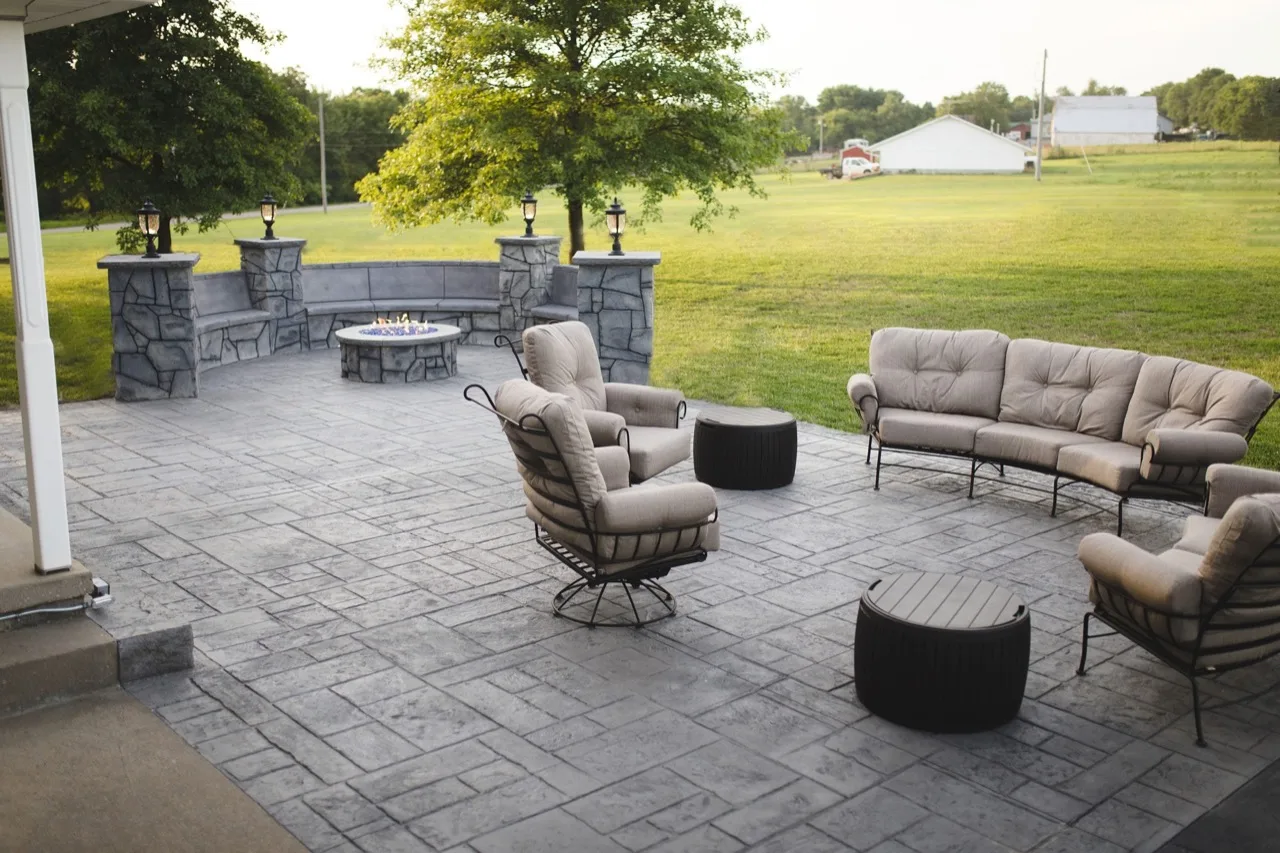
Stamped concrete is the middle path that wins for a lot of homeowners: the look of pavers or stone, in one solid slab, at a price well under real pavers. Keep the color light, get the base done right, and it holds up to the desert.
FAQ
Is it cheaper to pour concrete or use pavers? Concrete is cheaper up front. Plain concrete runs roughly $5 to $10 per square foot installed and stamped concrete about $9 to $30, while pavers run roughly $10 to $50. Stamped concrete typically saves around 30 to 40 percent over a comparable paver install. Pavers can narrow the gap over decades through longer life, but on day one concrete wins on price.
What is poor man’s concrete? It is a loose, informal term with no single meaning. Sometimes it refers to compacted gravel used in place of a real slab, and more often to a concrete mix that swaps some of the Portland cement for fly ash, an industrial byproduct. Despite the name, fly ash usually makes the mix denser and more crack-resistant, though it hardens more slowly. It is not the same thing as professionally poured stamped or decorative concrete.
What’s better, pavers or concrete? Neither is better for everyone. Pavers win on flexing with shifting soil, the longest lifespan, and easy single-unit repairs. Concrete, especially stamped, wins on lower upfront cost, a continuous surface with no joints to weed, and easier whole-surface drainage. In Arizona, pick pavers if you have known soil movement and want maximum longevity, or stamped concrete if you want the upscale look for less money and less upkeep.
How much would a 20x20 concrete patio cost? A 20x20 patio is 400 square feet, so a standard concrete patio generally runs about $3,200 to $7,200 installed, averaging around $4,000 for a typical finish. A plain slab can come in lower, near $2,400, while a stamped or decorative 20x20 can run $7,000 to $11,000 or more. These are market ranges, not a DC Construction quote, since the real number depends on your site and finish.
Do pavers or concrete stay cooler in the Arizona sun? Surface temperature is driven mostly by color, not by whether it is concrete or pavers. In side-by-side tests, light-colored surfaces ran coolest, light or stamped concrete landed in the same range as or below gray pavers, and bare gray concrete got the hottest of all. For a pool deck or a patio you will walk barefoot, the real lever is choosing a light color and a textured finish, in either material, and avoiding dark surfaces.
Which lasts longer in Arizona, concrete or pavers? Pavers generally last longer, often 25 to 50 years or more, because individual units flex with ground movement and a damaged one can be lifted and reset. Concrete typically lasts around 20 to 40 years and cracks as one slab if the base moves. Both numbers depend heavily on how well the base was prepped for our expansive soil, which matters more than the material itself.
Talk it through with a local crew
The right surface depends on your soil, your budget, and how you will use the space. DC Construction and Development pours driveways, patios, pool decks, and stamped concrete across Queen Creek and the East Valley, and we will give you a straight recommendation, even when concrete is not the only option worth considering. Ask for a free estimate and we will walk your project with you.