
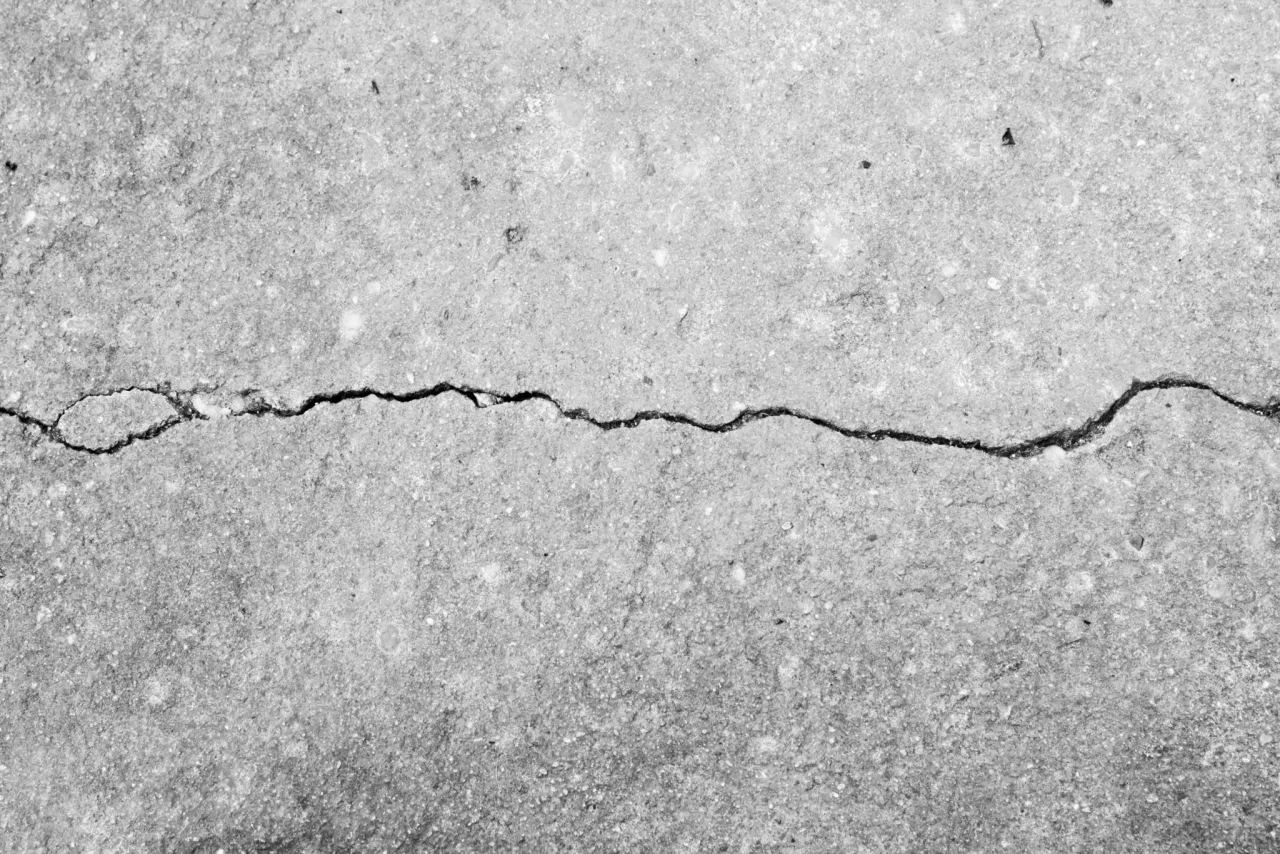
Why does concrete crack in Arizona?
Concrete is strong when you press on it and weak when something pulls it apart, so almost any force that stretches a slab relieves itself as a crack. In the Arizona desert, three local stresses stack on top of that: expansive clay and caliche that swell with monsoon rain and shrink in the dry months, pulling slabs up and down; extreme summer heat that flash-dries fresh concrete while it is still curing; and low humidity with dry winds that pull surface water out faster than the slab can bleed it. Most cracks you see are thin shrinkage cracks that are normal and cosmetic. The ones that matter are the wide, offset, or heaving cracks that signal the ground underneath is moving.
Built correctly for the desert, concrete in the East Valley lasts for decades. Here is what causes cracking around Queen Creek, which cracks to ignore, and how the right build prevents the serious ones.
The cracks you can ignore, and the ones you cannot
Not every crack means trouble. Knowing the type tells you whether to shrug it off or call someone.
| Crack type | What causes it | What it looks like | Cosmetic or structural |
|---|---|---|---|
| Plastic shrinkage | Surface water evaporates faster than the slab bleeds, driven by heat, dry air, and wind | Short, narrow, often random hairlines in the first day or two | Cosmetic |
| Drying shrinkage | Long-term moisture loss as concrete hardens, made worse by too few control joints | Thin cracks that show up over weeks or months | Cosmetic if thin |
| Thermal contraction | Temperature swings expand and contract the slab | Straighter cracks, often near a restrained edge or joint | Usually cosmetic |
| Settlement | A poorly compacted base, or clay and caliche moving under the slab | Wider cracks, often with one side higher than the other | Structural |
| Overload or too thin | A slab too thin or unreinforced for the weight on it | Cracks under load points, can be wide | Structural |
As a general guide, a crack around an eighth of an inch or thinner is usually cosmetic, a crack between an eighth and a quarter inch is worth sealing, and anything wider than a quarter inch, offset, or growing is worth a professional look. Those are rules of thumb, not code thresholds, so when a crack looks structural, get it assessed.
Why Arizona soil cracks concrete
The biggest driver of serious cracking in the Valley is underfoot. Much of Greater Phoenix sits on expansive clay, which swells when monsoon rain or irrigation soaks in and shrinks hard as it dries out. That repeated swelling and shrinking lifts and drops the ground under a slab, and a slab on a poorly prepped base moves right along with it. That movement is what opens the wide, offset cracks you do not want.
Caliche makes it worse. The cemented hardpan layer common across the East Valley acts like a buried bowl: monsoon runoff that seeps around a slab cannot drain through it, so water sits between the concrete and the caliche and feeds the soil movement. That is why grading, drainage, and base prep matter more here than in markets with stable ground. A properly compacted, well-drained base and the right reinforcement are what let a slab or foundation ride out the seasonal movement instead of cracking with it.
Why the heat cracks concrete
Arizona heat attacks concrete while it is still fresh. When summer days run past 110 degrees and the air is bone dry, the surface of a new pour loses water faster than the slab can bleed it upward, and the top skins over and cracks before it cures evenly. That is plastic shrinkage cracking, and it is almost entirely preventable with timing and curing: pouring in the cooler morning or evening hours, wetting the subgrade first, shading or breaking the wind, and keeping the slab damp or sealed while it cures.
This is also where the 90-minute rule comes in. It is the long-standing guideline that ready-mix concrete should be placed within about 90 minutes of the water meeting the cement, before it starts to set and lose strength. In our heat, that clock effectively runs faster, which is one more reason a desert pour has to be planned, not rushed.
How to prevent the cracks that matter
You cannot stop every hairline, but a slab built right for the desert avoids the cracks that actually cause problems. The fundamentals:
- Prep and compact the base. Dig to stable ground, deal with caliche, and compact a well-drained gravel base so the slab is not riding loose fill.
- Pour the right thickness. Match the slab to the load. A patio is not a driveway, and a driveway is not a shop floor.
- Reinforce it. Rebar or wire mesh ties the slab together so it spreads stress instead of splitting.
- Cut control joints on time and spaced right. Joints give the slab a planned place to crack. A common rule of thumb spaces them, in feet, at roughly two to three times the slab thickness in inches, so a 4-inch slab gets joints somewhere around 8 to 12 feet apart.
- Keep the water-cement ratio in check. A soupy, over-watered mix shrinks and cracks more as it dries.
- Cure it, and pour in the cool hours. Proper curing in the heat is the single biggest difference between a slab that lasts and one that crazes in its first summer.
What to do about a crack you already have
If the crack is thin, stable, and cosmetic, sealing it keeps water out and is a real fix. If it is wide, offset, or growing, the slab is likely moving on a shifting base, and sealing it only hides the problem until it reopens. Because our soil keeps moving, a structural crack that is patched without addressing the base almost always comes back, often worse. In those cases the lasting fix is to re-prep the base and replace the affected section.
If you are not sure which camp your slab is in, our guide on repairing or replacing concrete walks through how to tell, and our concrete repair and replacement page covers how we handle it. If you are planning a new pour and want to do it right the first time, the cost of concrete in Arizona guide shows where good base prep fits into the budget.
FAQ
When should I worry about concrete cracks? Thin hairline cracks, roughly an eighth of an inch or less, are normal shrinkage and usually just cosmetic. Start worrying when a crack is wider than about a quarter inch, has one side sitting higher than the other, is actively growing, or runs all the way through the slab. Those point to soil movement or a structural problem and are worth having a pro look at.
How do you fix cracked concrete? It depends on the crack. Narrow, stable, cosmetic cracks get cleaned and filled, with flexible filler or caulk for the thin ones and an epoxy or polyurethane injection for wider ones to seal out water. A slab that has structurally failed or is heaving from soil movement usually needs the soil addressed and that section replaced. Sealing alone will not fix a slab that is still moving, and replacement is the only way to make a crack truly disappear.
How do I stop my concrete from cracking? You cannot prevent every hairline crack, but you can prevent the serious ones. Start with a well-compacted, well-drained base, use the right slab thickness with rebar or wire mesh, cut control joints on time and at proper spacing, keep the mix from being over-watered, and cure the slab properly. In Arizona, pouring in the cooler hours and protecting fresh concrete from sun and wind makes a real difference.
What is the 90 minute rule for concrete? It is the long-standing industry rule of thumb that ready-mix concrete should be discharged within about 90 minutes of the water first meeting the cement, before it starts setting up and losing strength and workability. It comes from the ASTM C94 ready-mix standard. As of a 2021 update, that 90-minute figure is no longer an automatic default and is set by the buyer or producer, but the rule of thumb is still widely used on job sites.
Are hairline cracks in new concrete normal? Yes. Thin shrinkage cracks are expected as concrete cures and gives up moisture, and they show up on a large share of slabs without meaning anything is wrong. They are cosmetic and do not affect how the slab performs. What is not normal is a wide, offset, or growing crack soon after the pour, which points to a base or placement problem rather than ordinary shrinkage.
Does sealing a crack fix it for good? Only if the crack is stable. Sealing a dormant, cosmetic crack keeps water out and stops it from spreading, which is a real fix for that kind of crack. But if the crack is moving because the soil under the slab is shifting, sealing it just hides the symptom and it will reopen. A moving, structural crack needs the base addressed, and often the section replaced, to fix the actual cause.
Want it poured right the first time?
The cracks that cause problems start with the base and the pour, not the concrete. DC Construction and Development builds for Arizona soil and heat across Queen Creek and the East Valley, with proper base prep, reinforcement, control joints, and curing that hold up to our seasons. Ask for a free estimate and we will look at your site and tell you straight what it needs.